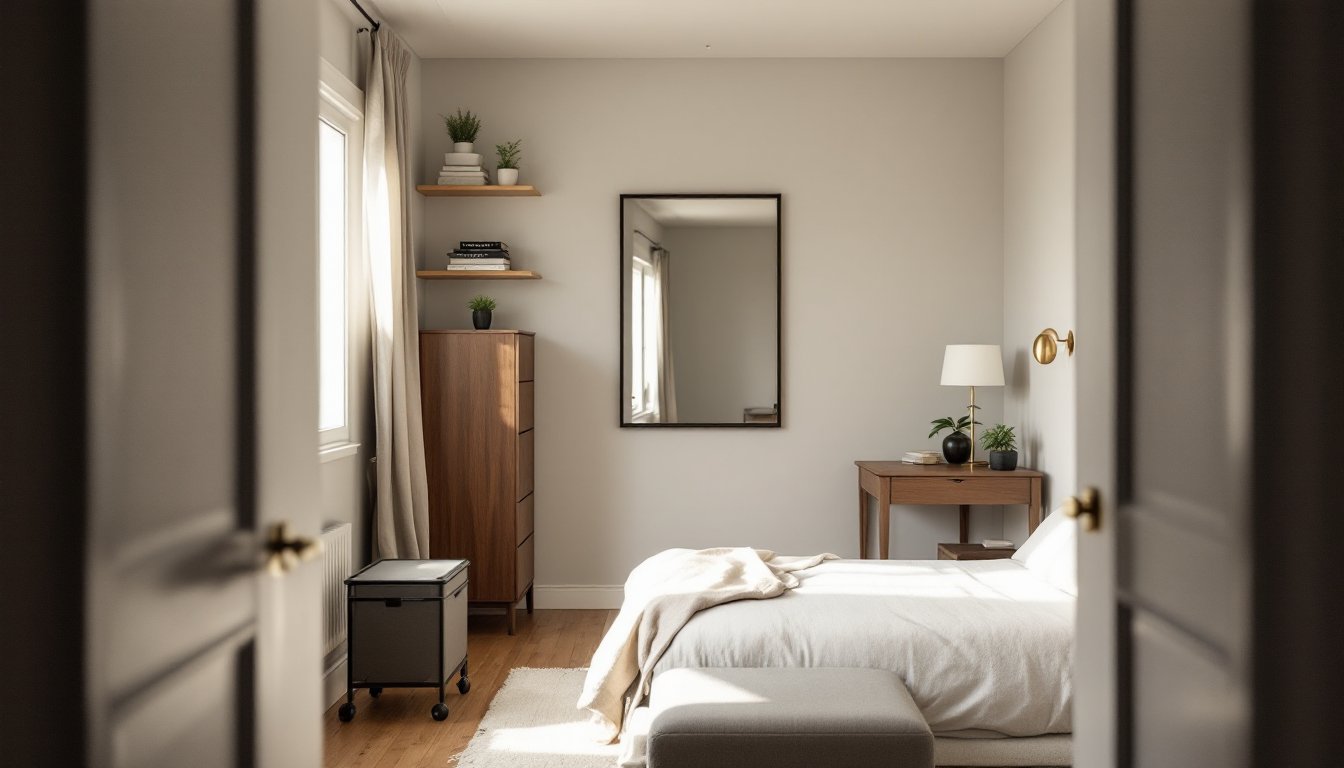
An awkward small bedroom layout can feel suffocating, sloped ceilings, odd corners, a radiator where the bed should go. But room size isn’t the real enemy: layout is. A 10×10 bedroom with smart furniture placement and intentional design choices will feel larger and function better than a 12×12 with everything crammed against the walls. This guide walks you through assessing your space’s unique challenges, positioning furniture strategically, and using vertical storage, lighting, and mirrors to transform that cramped corner into a bedroom that actually works for you.
Table of Contents
ToggleKey Takeaways
- Smart furniture placement and layout strategy matter far more than room size—a well-designed 10×10 bedroom functions better than a cramped 12×12 space.
- An awkward small bedroom layout improves when you anchor the bed to one wall, use vertical storage and floating shelves, and ensure clear traffic flow from door to bed.
- Wall-mounted furniture, narrow dressers, and double-duty pieces like storage benches maximize floor space while keeping your room from feeling cluttered.
- Layered lighting with dimmable fixtures and wall sconces, combined with strategically placed mirrors opposite windows, creates the illusion of more square footage.
- Transform cramped corners with under-bed storage drawers, floating desks, and corner shelving units instead of investing in expensive renovations.
Why Bedroom Layout Matters More Than Room Size
Most people assume a small bedroom’s problem is square footage. It’s not. A 140 sq. ft. bedroom with thoughtful layout beats a 160 sq. ft. space where the dresser blocks the window and the nightstand eats up walking room. Layout determines traffic flow, natural light access, and whether you feel cramped or calm, all psychological factors that affect how livable a space becomes.
Good layout starts with function. You need a clear path from the door to the bed without bumping furniture. You need the bed positioned so it doesn’t dominate the entire visual field when you enter. You need storage that doesn’t require you to squeeze sideways past an open dresser drawer. When these basics are solved, even a tight room stops feeling claustrophobic.
The other advantage of prioritizing layout over remodeling? It costs almost nothing. A $300 furniture rearrangement beats a $5,000 wall removal if the real problem is how pieces are positioned.
Assess Your Room’s Unique Challenges and Assets
Before moving anything, map your room’s quirks. Grab a tape measure and notebook, you’re hunting for constraints and opportunities. Measure the full room (length, width, ceiling height) and note doorway swing, window locations, electrical outlets, and heat sources. Walk the space and identify problem areas: does the door swing into where a dresser might go? Is there a sloped ceiling over half the room? Does a radiator or baseboard heater take up prime wall real estate?
Now find your assets. Windows bring natural light, position your bed to catch that view or soft morning light rather than fight against it. Alcoves or recessed walls can anchor a desk or narrow shelving. A wall with no outlets might be perfect for the headboard because you won’t need to work around cables. If you have angled ceiling, put low furniture (nightstand, bench) under the slope and tall pieces where headroom exists.
Sketch a rough floor plan to scale (1 inch = 1 foot is standard) on graph paper or use a free online tool. Mark doorways, windows, and fixed features in pencil. This takes 15 minutes but saves you hours of trial-and-error furniture shuffling later.
Furniture Placement Strategies for Awkward Spaces
The bed is the anchor. In a small room, it should claim one wall, typically the wall opposite the door or, if that’s tiny, the wall perpendicular to the entry. Avoid floating the bed in the middle: you’ll sacrifice walking space and the room will feel cramped. If your wall is short (due to a sloped ceiling or alcove), use a low-profile bed frame (under 12 inches tall) to maximize headroom and sight lines.
For dresser and nightstands, vertical stacking beats spreading out. A tall, narrow dresser (18–24 inches wide, 40+ inches tall) takes less floor space than a wide, shallow one. Nightstands don’t need matching pieces, a wall-mounted shelf or small vintage table works fine and frees up floor area. If wall space is tight, corner shelving units fit awkward angles better than furniture with legs that wobble on uneven floors.
Desks belong on the shallowest wall. A 24-inch-deep desk works in tight rooms: avoid 30-inch depths unless your room is over 120 sq. ft. If you need both sleeping and working space, a narrow wall-mounted desk (16–20 inches deep) folds down or simply floats without eating floor area.
The golden rule: every piece should pull double duty. A storage bench at the foot of the bed provides seating, hides blankets, and doesn’t stick into the room the way a standalone chair would. A nightstand with drawers beats a open shelf. This isn’t about cramming more, it’s about choosing pieces that function harder in the same footprint.
Using Vertical Space to Open Up Your Room
Small bedrooms demand vertical thinking. Your floor is precious: your walls are free real estate. Install floating shelves (12–24 inches deep) above the desk, dresser, or bed head. They cost $30–80 per shelf and take 30 minutes to hang into studs with a level and a drill. Use them for books, plants, decor, or folded items, anything that would otherwise sprawl across the dresser top.
Wall-mounted nightstands and floating desks eliminate furniture legs that eat floor space and make the room feel segmented. A wall-mounted bedside table (12×12 inches) holds a lamp and phone without the visual bulk of a traditional nightstand. Similarly, a fold-down desk or slim floating desk (16 inches deep) vanishes when not in use, freeing the visual field.
Don’t forget the vertical space above doorways and windows. Narrow shelving units or hanging pegboards can hold seasonal items, office supplies, or decorative baskets. If your ceiling is tall enough to spare, hang wall-mounted hooks for robes, bags, or hats instead of using floor space for a coat rack.
One warning: too many floating shelves create visual clutter and make a small room feel busier, not bigger. Limit yourself to 2–3 shelving units total and keep them organized. An open shelf stuffed with random boxes reads as claustrophobic.
Lighting and Mirrors: Game-Changers for Small Bedrooms
Lighting is invisible infrastructure that transforms rooms. Overhead fixtures make small rooms feel like closets: instead, layer your light. Use a dimmable ceiling fixture as general light (install one with a low-profile, semi-flush design to avoid visual bulk), wall sconces on either side of the bed or above the desk for task light, and a small table lamp for accent. This combo costs $100–250 installed and makes the space feel intentional rather than lit by a single bare bulb.
Mirrors are your layout secret weapon. A large mirror (24×36 inches or bigger) opposite a window reflects natural light deep into the room and creates the optical illusion of extra square footage. Position it on the wall opposite the window, not next to it, the reflection needs space to bounce. Avoid tiny decorative mirrors: in a small room, they clutter the visual field without providing functional benefit.
Color temperature matters too. Warm LED bulbs (2700K) feel cozier than cool white (4000K+), which can make tight spaces feel clinical. Dimmers give you flexibility, bright for getting ready, warm and dim for evening. Skip traditional incandescent bulbs: LED bulbs cost slightly more upfront but last 10+ years and run cool enough that you won’t overheat a small room with the lights on all evening.
Multi-Functional Furniture and Storage Solutions
In a small bedroom, every piece earns its keep. Storage ottomans do double duty: seating and hidden storage for off-season bedding or extra pillows. A storage bench at the foot of the bed costs the same as a regular bench but holds twice the value. Under-bed storage drawers on wheels slide out for off-season clothes without requiring closet expansion.
Don’t overlook wall-mounted cabinets or wardrobes for clothing if your closet is undersized. A slim armoire (24 inches wide, 60+ inches tall) holds as much as a closet rod and takes less floor space than you’d think. Pair it with open shelving for books or decorative items, and you’ve layered storage without cluttering the visual field. Look for budget-friendly furniture makeovers and DIY solutions to repurpose old pieces instead of buying new.
Bed risers (4–8 inches tall) create under-bed storage space for rolling drawers or shallow boxes. They cost $20–40 and transform wasted space. Just make sure your mattress and bedding still feel accessible for cleaning and changing sheets, a bed that’s too high becomes a pain.
Closet rods, shelf dividers, and drawer organizers cost pennies and multiply usable storage. A closet rod that extends partway into the closet (for shorter items like folded sweaters) uses vertical space smarter than a single rod at full height. Rolling storage carts with 3–4 tiers fit in corner gaps and hold office supplies, art materials, or folded items. They cost $40–80 and move out of the way when you need floor space.
Conclusion
A small or awkward bedroom becomes functional, even beautiful, when you prioritize layout over size. Start by understanding your room’s constraints and assets, then position furniture to maximize flow and light. Build upward with shelving and wall-mounted pieces, add layered lighting and strategic mirrors, and choose storage furniture that pulls double duty. The result is a room that breathes. And unlike renovation projects that require permits and contractors, these moves are reversible, low-cost, and entirely in your hands. Your awkward bedroom isn’t a limitation, it’s just waiting for a smarter layout.