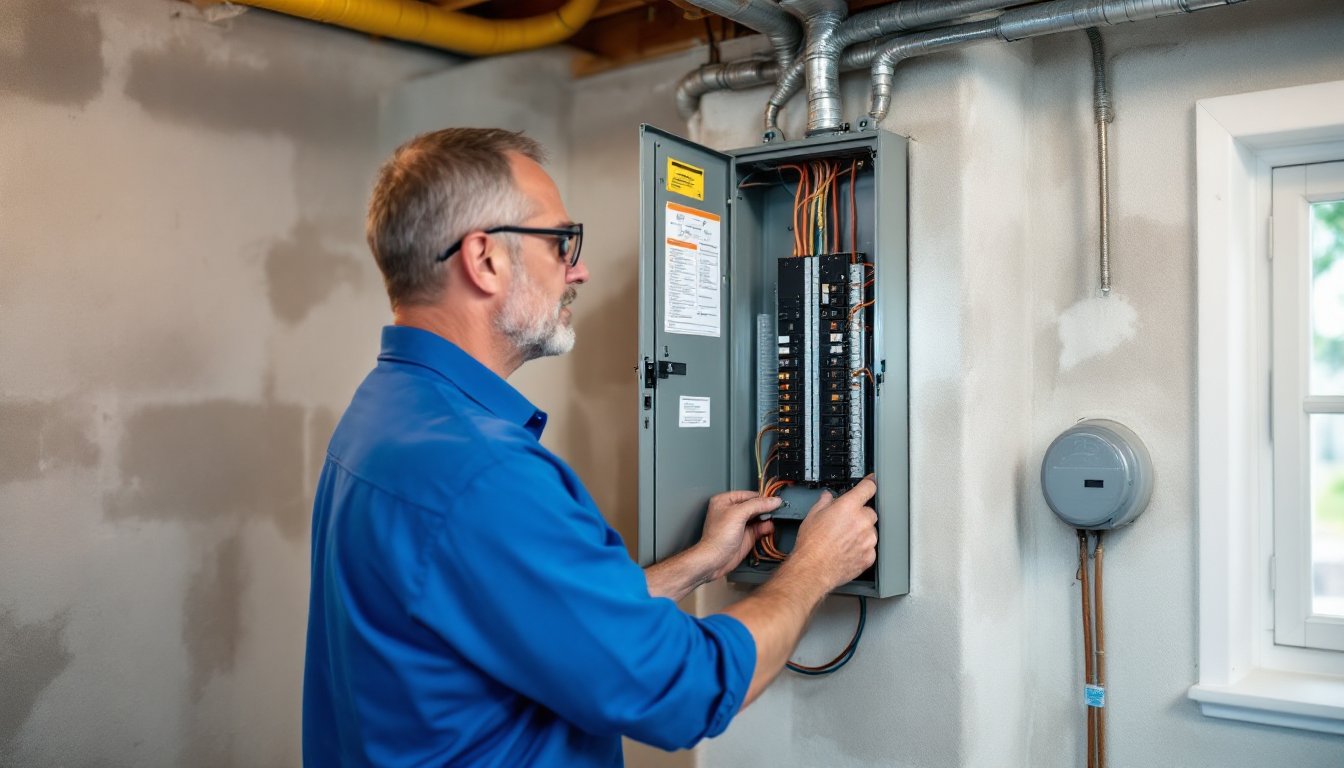
An outdated or undersized electrical panel isn’t just an inconvenience, it’s a safety liability. As homes add everything from air conditioning units to electric vehicle chargers, the original 100-amp panel installed in the 1980s often can’t keep up with today’s power demands. A house electrical panel upgrade becomes necessary when you’re constantly flipping breakers, experience frequent power outages, or notice that adding new circuits requires removing old ones. This guide walks you through why you might need one, what the process involves, and what to expect when you bring in the professionals who’ll handle this critical work.
Table of Contents
ToggleKey Takeaways
- A house electrical panel upgrade is essential when breakers trip frequently, lights dim during appliance use, or your home lacks available breaker slots for new circuits.
- Modern homes typically require 150–200 amps of service capacity, and applying the 80% rule means a 100-amp panel realistically supports only about 19,200 watts of continuous load.
- The electrical panel upgrade process takes 2–4 weeks and includes assessment, permitting, installation, and municipal inspection—costs range from $3,000–$6,000+ depending on location and complexity.
- Older panels with fuses or outdated breaker types like Federal Pacific Electric (FPE) or Zinsco panels pose fire hazards and often must be upgraded to meet current building codes and mortgage requirements.
- Licensed electricians must handle service-entrance work due to lethal shock risk and code complexity; obtain a permit before starting to ensure legal compliance and avoid insurance or future sale complications.
- A load calculation performed by a licensed electrician determines your actual power needs based on home square footage, heating/cooling type, appliances, and planned future additions like EV chargers.
Why You Need an Electrical Panel Upgrade
Your electrical panel (also called a breaker box or service panel) is the main distribution point for all power running through your home. It’s where the utility company’s feed connects and where circuit breakers protect individual branches of your electrical system. The panel’s amperage rating, typically 100, 150, or 200 amps for residential homes, determines how much total electricity you can draw at any moment.
When you consistently max out your panel’s capacity, you face real problems: appliances run slowly, lights dim when you turn on the air conditioning, and your entire electrical system works under stress. Older homes built before the 1970s might have 60-amp service, which is barely adequate by today’s standards. Modern homes typically require 150–200 amps, and high-demand homes (with electric heating, central AC, EV charging, and modern appliances) might need 200+ amps.
Beyond capacity issues, older panels with technologies like fuses or outdated breaker types pose fire hazards. If you have standing water in your basement, frequent breaker trips, or outdated technology like Federal Pacific Electric (FPE) or Zinsco panels, an upgrade isn’t optional, it’s essential. Most building codes now require newer panels with proper grounding and bonding, and lenders often demand an upgrade before issuing a mortgage on an older home.
Signs Your Panel Needs Upgrading
Before you commit to an upgrade, understand the warning signs. Some are immediately obvious: others creep up gradually.
Your panel might be undersized if you’re adding major appliances or renovation projects and running out of available breaker slots. You can’t simply install more breakers in a full panel, they won’t fit, and cramming circuits into an existing panel compounds safety risks. Selling your home? Many jurisdictions now require electrical inspections that flag outdated panels, and deals often fall through without an upgrade.
Frequent Breaker Trips and Power Issues
Breakers trip when circuits draw too much current, protecting wiring from overheating and fires. Occasional trips after plugging in multiple high-draw appliances (vacuum, hair dryer, microwave simultaneously) is normal. But if breakers trip constantly, especially with routine use, that’s a red flag.
One circuit shouldn’t carry the load of multiple major appliances. If your kitchen circuit breaker pops every time you use the refrigerator and oven together, that circuit is undersized for modern kitchens, which typically demand dedicated 20-amp circuits for each major appliance. Similarly, if you’ve been moving circuits around to “make room” for new additions, you’re masking a deeper capacity problem.
Another critical sign is dimming lights when large appliances cycle on. This indicates your panel is struggling to handle simultaneous demand across multiple circuits. When your lights flicker during normal use, or when the AC compressor kicks in and your whole house seems to dim, your utility company might be delivering enough power at the meter, but your panel can’t distribute it efficiently. This points directly to insufficient panel capacity.
Understanding Panel Amperage and Capacity
Amperage is the volume of electrical current flowing through your home at any moment. Voltage (typically 240 volts in US residential service) is the pressure pushing that current. Watts (power) equals amps times volts, and your panel must handle peak demand without triggering breakers unnecessarily.
A 100-amp panel could theoretically deliver 100 amps continuously at 240 volts, about 24,000 watts. But real-world safety margins mean you shouldn’t continuously draw more than 80% of that (a principle called the 80% rule in electrical codes). That means a 100-amp panel realistically serves about 19,200 watts of continuous load. Factor in occasional peak demands (like when your heating, AC, water heater, and dishwasher all run briefly at the same time), and you need more cushion.
Upgrading from 100 to 150 amps adds 36,000 watts of potential capacity and is the most common upgrade. Moving to 200 amps provides 48,000 watts. The right choice depends on your home’s square footage, heating/cooling type, appliance count, and whether you’re planning future additions like EV charging or a sauna.
During an upgrade, an electrician will perform a load calculation, a systematic review of every circuit and appliance, to determine your actual needs. This calculation follows the National Electrical Code (NEC), which provides formulas based on square footage, kitchen circuits, and major appliances. Codes vary by jurisdiction, so your local authority having jurisdiction (AHJ) may have stricter requirements than the baseline NEC.
The Electrical Panel Upgrade Process
A full panel upgrade involves four main stages: assessment, permitting, work, and inspection. The entire process typically takes 2–4 weeks from initial inspection to final sign-off.
Assessment and Estimation
A licensed electrician visits your home, inspects the existing panel, and runs a load calculation. They’ll examine wire gauge, breaker condition, grounding, and the condition of service entrance lines (the cables running from the meter to your panel). They’ll also check whether your utility’s service line and meter can support a higher amperage. Sometimes the utility company must upgrade their infrastructure first, adding cost and time.
Once the electrician understands your needs and existing setup, they’ll provide a detailed estimate. Costs vary widely, expect $3,000–$6,000+ depending on your location, panel size upgrade, and whether the electrician must reroute existing circuits. Factors like whether the panel is in an easy-access basement versus buried in a wall also affect labor time.
Materials and Equipment
You’ll need a new panel (typically a Square D, Siemens, or GE main panel in modern homes), new main breaker if required, new circuit breakers matched to the panel, wire, conduit, and potentially a new meter base if the utility requires it. The electrician orders these during the planning phase.
Cutting Power and Swapping the Panel
On work day, the electrician coordinates with your utility to temporarily disconnect service. Never attempt this yourself, it’s dangerous and illegal without proper licensing. The utility typically shuts off power at the transformer, not at your meter, so there’s zero risk of active lines.
With the main feed disconnected, the electrician removes the old panel and installs the new one. This takes 4–8 hours depending on complexity. All existing circuits are reconnected to new breakers in the new panel, and the main feed is rewired to the new panel’s main breaker. If you’re adding circuits (like a dedicated 20-amp 240-volt circuit for an EV charger), new wire runs are pulled from the panel to those locations during this phase.
Permits, Inspections, and Professional Requirements
This is non-negotiable: you need a permit before starting. A permit ensures the work meets local codes and triggers an inspection, protecting you legally and preventing future sale complications. Unpermitted electrical work can void homeowners insurance, block home sales, and result in fines.
Your licensed electrician typically handles permit applications. After the new panel is installed, a municipal electrical inspector visits to verify the work meets the NEC and local amendments. They check breaker sizing, wire gauge compatibility, grounding/bonding, proper labeling on circuits, and correct bonding to the water main and grounding rod. If any issues are found, they’ll require corrections before final approval.
Electrical work is one area where a DIYer absolutely should not attempt the main work. The lethal shock risk, code complexity, and permitting requirements demand licensed expertise. A homeowner can usually handle low-voltage tasks (LED fixtures, outlet outlets) but not service-entrance work. Hiring a licensed electrician guarantees insurance protection and code compliance. Recent guidance on electrical renovations emphasizes that professional installation protects both safety and property value.
If you want to minimize costs, avoid scope creep during the project. Stick to your upgrade plan unless the inspector flags something critical. Adding circuits, rewiring rooms, or installing new sub-panels mid-project inflates costs quickly. Detailed cost considerations for electrical panel upgrades show that labor time is the largest variable, so finalizing the scope upfront keeps expenses predictable.
After inspection, the utility reconnects power at the transformer, and you’re live on the new panel. The electrician typically provides a panel directory showing which breaker controls which area or appliance, keep this posted inside the panel door for future reference.
Conclusion
An electrical panel upgrade is a significant investment, but it’s one of the highest-ROI home improvements you can make. It eliminates safety hazards, accommodates modern power demands, supports future additions, and protects your home’s value. If you’re seeing signs of an undersized panel, don’t wait. Get a load calculation from a licensed electrician, pull the permit, and let the professionals handle the work. Your future self, and your insurance company, will thank you. For more home maintenance guidance, check reliable sources that walk you through seasonal priorities and critical upgrades.