Most homeowners will face a toilet problem eventually, whether it’s a running bowl that drains your water bill or a leak that spreads puddles across the bathroom floor. The good news is that many toilet repairs are well within reach for a confident DIYer. Understanding how your toilet works and recognizing what’s actually broken takes you halfway to a fix. This guide walks you through the most common toilet issues, the tools you’ll need, and honest guidance on when to stop and call a licensed plumber. With the right approach, you can save money and get your bathroom back in working order without waiting for a service call.
Table of Contents
ToggleKey Takeaways
- Most common toilet repair problems—running toilets, clogs, and leaks—can be diagnosed by listening to unusual sounds and inspecting the tank interior, saving time before attempting fixes.
- Fixing a running toilet typically involves replacing a worn flapper (the rubber disc at the tank’s base) for $5–$15 and 10 minutes of work, making it an ideal first DIY toilet repair.
- Toilet plumbing repairs often require only basic tools like a plunger, adjustable wrench, and toilet auger, with replacement parts costing under $100 for most common issues.
- Call a licensed plumber if the toilet cracks, multiple drains back up, water damage is visible, or you’ve already attempted repairs twice without success—these situations signal problems beyond DIY scope.
- Avoid chemical drain cleaners for toilet clogs and never flush non-flushable items like wipes and paper towels, which are the leading cause of blockages.
Identify Your Toilet Problem
Before you grab a wrench, listen to what your toilet is telling you. A running toilet makes constant trickling sounds and wastes thousands of gallons of water monthly. A clogged toilet won’t flush completely or drains slowly. A leak at the base leaves water pooling around the bottom. A faulty fill valve (the mechanism that refills the tank after flushing) causes hissing or weak refills.
Listen carefully, inspect the tank interior by lifting the lid, and check under the tank for dampness. These first steps help you avoid unnecessary part replacements. Most toilet problems trace back to three main culprits: the flapper (the rubber seal that lets water out), the fill valve, or debris in the bowl or trapway. Understanding which component is failing saves time and frustration.
Fix a Running Toilet
A running toilet is the most common issue and usually the easiest to fix. The problem is typically a worn flapper, the rubber disc at the bottom of the tank that seals the drain hole. When the flapper degrades or warps, water leaks into the bowl continuously, and the fill valve kicks in to top up the tank.
Start by lifting off the tank lid carefully and setting it on a soft surface: it’s fragile. Flush the toilet and watch the flapper. If it doesn’t seal completely or rocks in the seat, you’ve found your culprit. A quick fix: turn off the water supply valve at the wall behind the toilet, drain the tank, and clean the flapper seat (the metal or ceramic ring where the flapper seals). Mineral deposits or debris often prevent a tight seal. Use a soft cloth or sponge, don’t scrub with abrasive materials.
If cleaning doesn’t work, replace the flapper. Most flappers cost $5–$15 and take 10 minutes to swap. Lift the flapper off its pivot pins, install the new one, and turn the water back on. Test by flushing twice. This is a high-confidence first repair for any homeowner.
Repair a Clogged Toilet
A clogged toilet is frustrating but rarely requires a professional visit. Start with a plunger, the cup-style plunger works better than a flange plunger for toilets (even though what the marketing says). Fill the bowl with enough water to cover the plunger cup completely. Place the plunger over the drain hole, press down firmly, and pull up sharply. Repeat 15–20 times with good suction.
If plunging doesn’t budge the clog, try a toilet auger (also called a plumbing snake). This tool costs $20–$40 and lets you reach blockages deeper in the trapway. Insert the curved end into the drain and crank the handle. You’ll feel resistance when you hit the clog: keep cranking gently. Don’t force it, too much pressure can crack the porcelain. Once you break through, plunge again to clear loose debris.
For stubborn clogs, you may need a wet/dry shop vacuum to extract water and debris, or a professional plumber with a motorized snake. Avoid chemical drain cleaners: they’re harsh on pipes and often ineffective on toilet clogs. Never flush non-flushable items, paper towels, wipes, feminine products, or “flushable” wipes clog more toilets than actual waste.
Replace a Faulty Fill Valve
The fill valve (sometimes called a ballcock or inlet valve) refills the tank after each flush. A worn fill valve hisses continuously or fills slowly, wasting water and making the toilet unreliable. Replacement takes 20–30 minutes and costs $30–$60 for the valve itself.
Turn off the water supply and flush to empty the tank completely. Disconnect the water supply line from the bottom of the fill valve using an adjustable wrench. This connection is plastic or brass: turn counterclockwise. Have a bucket ready for any lingering water. Remove the large nut under the tank (between tank and bowl) that secures the old valve. Pull the valve up and out.
Install the new fill valve in the same hole, thread the nut back on hand-tight, then snug it with a wrench, not crushing-tight, just firm. Reattach the water supply line. Turn the water back on slowly and listen for proper tank refilling. Adjust the water level by turning the adjustment clip or screw on the valve per the instructions (usually included). Many fill valve failures happen when someone over-tightens the connection: hand-tight plus a quarter-turn with the wrench is the standard.
Stop a Leaking Base
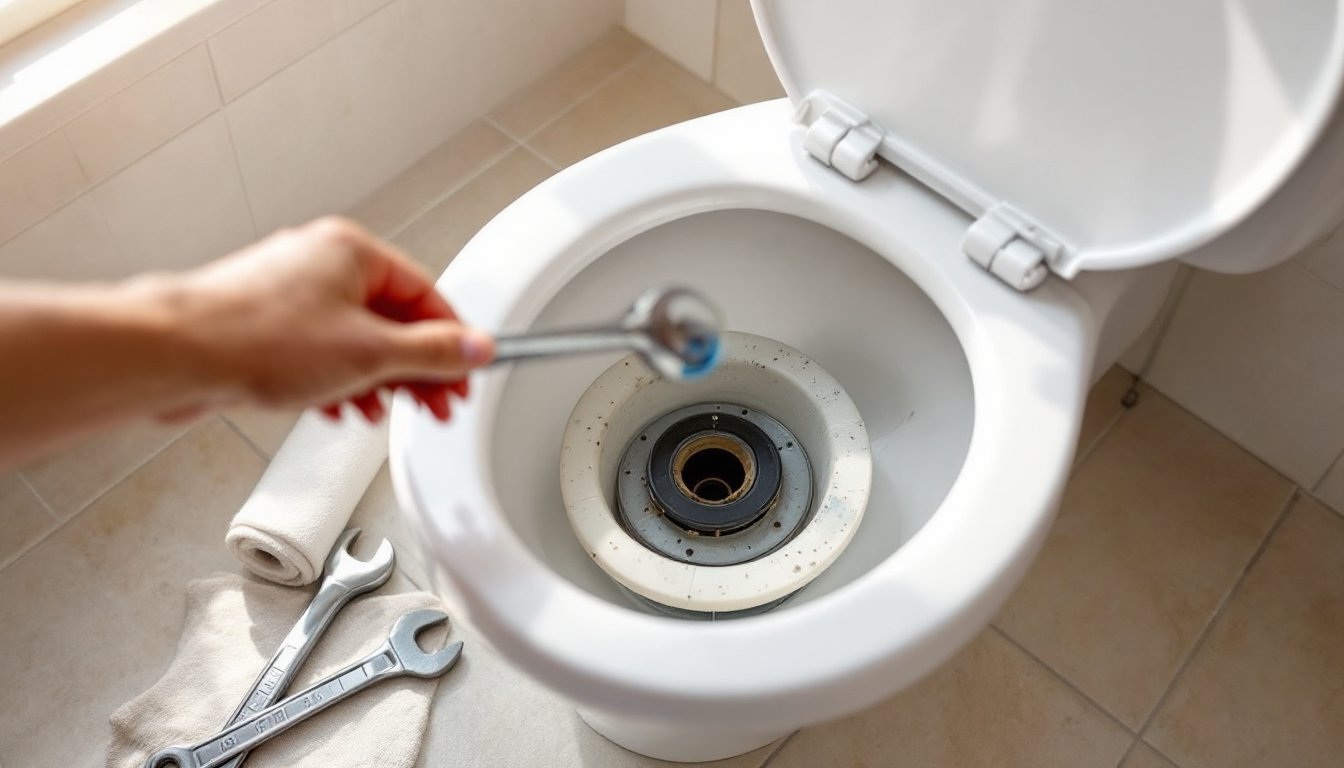
Water pooling around the toilet base is a serious warning sign. The leak usually comes from the wax ring or gasket that seals the gap between the toilet and the flange (the fitting set into the floor). This isn’t a quick fix, it requires removing the toilet, which means shutting off water, unbolting the bowl, and resetting it.
If the leak is small and only visible after flushing, the issue might be loose tank bolts. Locate the bolts running down the back of the tank where it connects to the bowl. Using an adjustable wrench inside the tank and another wrench under the bowl, tighten these bolts gradually, a quarter-turn at a time on each bolt. Over-tightening cracks the porcelain. Check for leaks after each adjustment.
If tightening bolts doesn’t stop the leak, the wax ring is probably damaged. Removing and reinstalling the toilet is beyond beginner scope and usually requires turning off the main water supply, unbolting the toilet from the floor flange, and replacing the wax ring or newer silicone gasket. This is heavy work requiring two people and precision. Consider calling a plumber for this repair: mistakes can damage the floor or flange, creating bigger problems.
Tools and Materials You’ll Need
Smart preparation prevents frustration. Here’s what every toilet repair kit should include:
Essential Tools:
• Adjustable wrench (8–12 inch)
• Plunger (cup-style)
• Toilet auger or plumbing snake
• Flathead and Phillips screwdrivers
• Bucket (for water spillage)
• Soft sponge or cloth
• Flashlight (tank interiors are dim)
• Rubber gloves and safety goggles
Common Replacement Parts:
• Flapper kit ($5–$15)
• Fill valve ($30–$60)
• Flush valve seal or gasket ($10–$20)
• Wax ring with gasket ($8–$15 for silicone: $3–$8 for traditional wax)
When shopping, bring photos of your toilet or the existing part. Tank shapes and connection sizes vary. Products at home improvement retailers come in universal and tank-specific versions: universal works for most toilets but measure twice. Wear gloves and safety goggles when working inside the tank, old porcelain can have sharp edges, and tank water isn’t sanitary.
When to Call a Professional Plumber
Knowing when to stop is as important as knowing how to start. Call a plumber if:
• The toilet cracks or porcelain chips noticeably (repairs won’t hold water long)
• Multiple drains back up or gurgle, this signals a main line blockage, not a toilet issue
• The leak originates from internal cracks or the trapway (not a joint or seal)
• You’ve tried two flapper or fill valve replacements and the problem persists
• Water damage to the subfloor is visible: mold growth requires professional assessment
• You’re uncomfortable removing or reinstalling the toilet
Toilet removal and reinstallation, floor flange repair, and septic system issues require licensed expertise and permits in many jurisdictions. Some areas also require a licensed plumber for any work beyond the tank interior. Check your local building codes. A service call costs $150–$300: a new toilet install runs $300–$500 plus labor. When repairs exceed half a new toilet’s cost, replacement often makes more financial sense, especially for older models that leak or clog frequently. Professional plumbers also have motorized snakes and pressure-based equipment that can clear clogs homeowner tools can’t reach, and they stand behind their work with a warranty.