If you’ve noticed dust settling on shelves faster than you can wipe them, or caught yourself sneezing more indoors than out, an air purifier might be worth considering. Unlike decorative air fresheners, modern air purifiers actively pull contaminated air through mechanical filters to trap particles, allergens, and odors at the source. They’ve become standard in homes dealing with allergies, pet dander, urban pollution, or lingering cooking smells. But before dropping money on one, it’s worth understanding how they actually work, what they can and can’t do, which technologies matter, and whether a particular model fits your space. This guide walks you through the mechanics in plain language so you can make an informed choice.
Table of Contents
ToggleKey Takeaways
- An air purifier works by drawing contaminated air through mechanical filters—typically HEPA and activated carbon—to trap particles, allergens, and odors before releasing cleaned air back into the room.
- HEPA filters capture 99.97% of particles 0.3 microns or larger and should be replaced every 6–12 months, while activated carbon filters handle odors and gases but saturate within 3–6 months.
- Match your air purifier’s CADR (Clean Air Delivery Rate) and square footage rating to your room size to ensure the unit refreshes air frequently enough for effective performance.
- How air purifiers function best in sealed rooms with doors and windows closed; they won’t solve moisture, carbon monoxide, or severe mold issues, which require separate solutions.
- Budget $40–$100 annually for filter replacements, maintain the pre-filter monthly, and place your unit in central locations away from walls to optimize airflow and efficiency.
- Pair air purifier use with regular vacuuming, dusting, and deep cleaning for maximum indoor air quality improvement rather than relying on the purifier alone.
Understanding Air Purifier Basics and Why They Matter
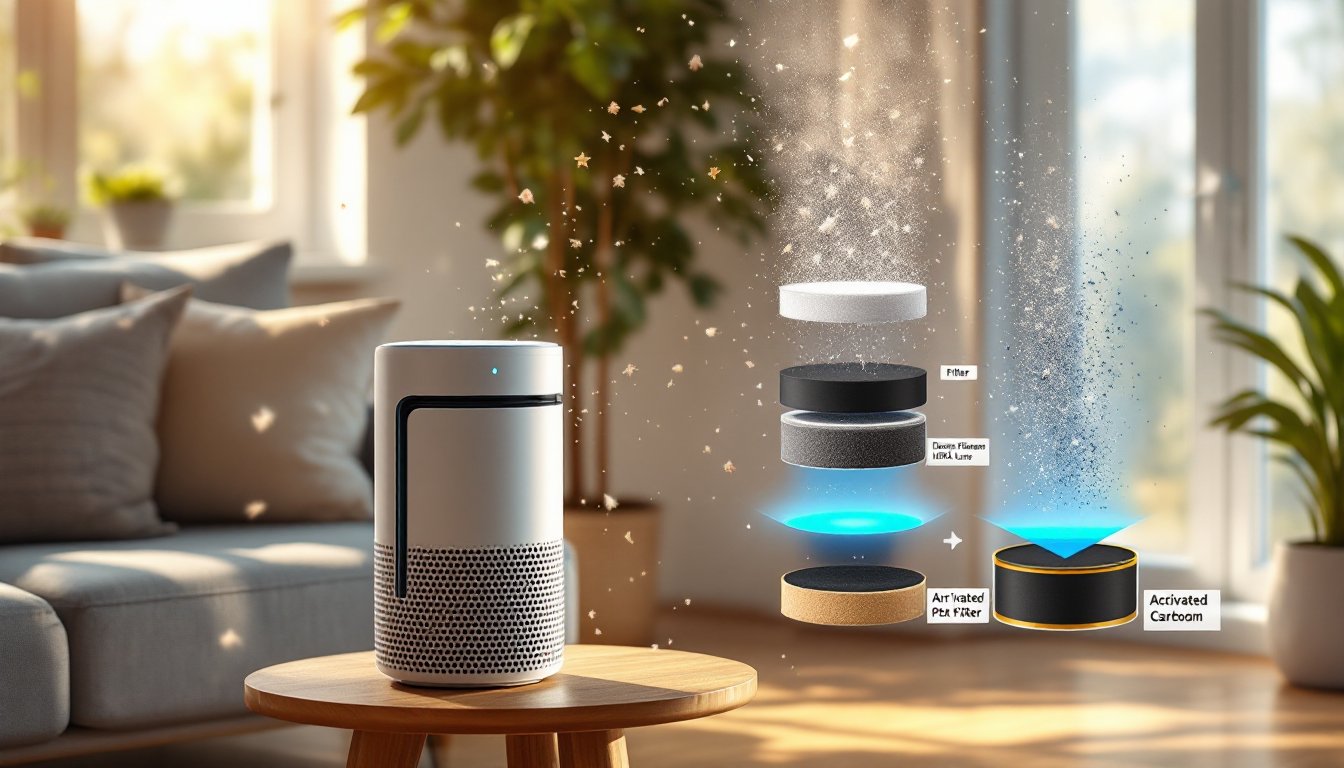
An air purifier is essentially a fan attached to a filter. It draws contaminated air into its housing, pushes it through one or more filter layers, and releases cleaned air back into the room. The filter traps particles, dust, pollen, pet hair, mold spores, and microscopic pollutants, while cleaner air exits.
The key metric is CADR (Clean Air Delivery Rate), which tells you how quickly a unit cycles air. A higher CADR means the purifier refreshes your room’s air more frequently, which matters in larger spaces or rooms with heavy contamination. Most purifiers are rated for specific square footages, so match the unit’s capacity to your room size.
Air purifiers won’t solve moisture problems, carbon monoxide, or severe mold growth, those need separate solutions. They also work best in relatively sealed rooms: opening windows defeats the purpose. But for everyday particles and odors, they’re practical and straightforward.
The Main Filtration Technologies Explained
Two filtration methods dominate the market: HEPA (High-Efficiency Particulate Air) and activated carbon. Most effective purifiers combine both. Understanding what each does helps you pick the right model for your situation.
HEPA Filters: The Gold Standard for Particle Removal
A HEPA filter is a dense mat of fiberglass fibers arranged randomly. As air passes through, particles get trapped by three mechanisms: they collide with fibers and stick (impaction), they get wedged between fibers (interception), or they get bounced around and eventually snag (diffusion). True HEPA filters capture 99.97% of particles 0.3 microns or larger, small enough to catch bacteria and most allergens, yet large enough to clog less quickly than finer filters.
The catch: HEPA filters are thick, which means the motor works harder and replacement costs add up. Expect to swap them every 6–12 months depending on air quality and usage. If you see “HEPA-type” or “HEPA-like,” that’s a weaker standard and won’t perform as well.
Activated Carbon Filters for Odors and Gases
Activated carbon is charcoal that’s been treated to have a porous surface with millions of tiny holes. These create enormous surface area for chemical absorption. Unlike HEPA, which traps particles, activated carbon works on gases and odors, smoke, cooking fumes, VOCs (volatile organic compounds), and pet smells. It doesn’t remove dust or allergens: it complements HEPA.
Carbon filters saturate over time and lose effectiveness. They typically last 3–6 months in average homes, less in smoky or high-odor environments. Replacing them is cheaper than HEPA but still a recurring cost worth budgeting.
How Air Purifiers Capture and Clean Your Home’s Air
The mechanics are straightforward but effective. A motorized fan draws air in through intake vents, usually on the base or back of the unit. That air passes through a pre-filter (a coarse mesh catching large dust and hair), then through the HEPA layer (removing fine particles), and often a carbon layer (absorbing odors). Cleaned air exits through vents, usually at the top or sides.
The entire cycle repeats multiple times per hour. According to how air purifiers function, fan-powered filtration systems rely on moving sufficient volume through each filter stage to be effective. A unit rated for 300 square feet in a 200-square-foot bedroom will cycle air more frequently than the same unit in a 400-square-foot space, so placement and room size matter.
Some purifiers add extra steps, ionizers that charge particles so they stick to surfaces, UV-C lights that zap bacteria, or photocatalytic filters. These technologies have mixed effectiveness and aren’t necessary for basic particle and odor removal. The core HEPA and carbon combo handles most household needs reliably.
Choosing the Right Air Purifier for Your Space
Start with room size and compare it to the purifier’s rated coverage. If the unit is undersized, it won’t refresh air frequently enough. If oversized, you’re paying for capacity you don’t need. Most models list coverage in square feet.
Next, consider noise. Purifiers run continuously or on a schedule, so a 70-decibel fan can get annoying fast. Check reviews on actual noise levels at different speeds. Many units offer a quiet “sleep mode” for nighttime use.
Filter replacement cost isn’t trivial. A typical HEPA and carbon combo costs $40–$100 per year. Over five years, that’s real money. Budget accordingly, and check online prices before buying, retailers often markup replacement filters heavily.
According to detailed reviews and guidance, homeowners should evaluate both the unit’s filtration types and its real-world performance in similar homes. Pet owners might prioritize carbon filters: allergy sufferers should focus on HEPA ratings and CADR.
Smarter features (WiFi, app controls, filter-replacement alerts) add convenience but increase upfront cost. For a basic bedroom purifier, they’re unnecessary. For a central living space you want to monitor remotely, they’re worth considering.
Maintenance Tips to Keep Your Purifier Running Efficiently
A purifier is only as good as its filters. Neglect maintenance and you’re just blowing dust through a clogged filter that’s no longer trapping anything.
Check the pre-filter monthly. If it’s visibly clogged, vacuum it gently (not water) or replace it. A clean pre-filter extends the life of the expensive HEPA filter underneath.
Note your filter replacement dates. Set a phone reminder or calendar alert. Manufacturers recommend replacement timelines: stick to them. Running past the replacement date reduces efficiency and makes the motor work harder.
Place the unit strategically. Position it away from walls and furniture that block airflow. A unit shoved in a corner won’t pull air efficiently. Central placement or against a wall with clear intake vents works best.
According to comprehensive information on filtration mechanics, maintaining clean filters and optimizing fan-powered airflow ensures purifiers continue delivering rated performance. Dust buildup on exterior vents also reduces airflow: wipe them down every few weeks.
Keep doors and windows closed while running. Open windows let contaminated air back in and waste the purifier’s work. If you need ventilation, run the purifier afterward to recapture the room.
Don’t expect magic. An air purifier is one layer of indoor air quality, pair it with regular vacuuming (ideally with a HEPA vacuum), dusting, and occasional deep cleaning for best results.